

DIY Crafts from Recycled Materials: Simple Projects That Save Money
If you’re searching for DIY crafts using recycled materials, you’ve come to the right place. These projects turn empty bottles, old cardboard, and tin cans into beautiful home decor and fun toys. I’ll share easy steps, safety tips, and creative ideas for both adults and kids. By reusing what you already have, you save money and help the planet. Let’s turn that recycling bin into a craft box full of potential—I promise, it’s easier than you think.
I’ve been running craft workshops for over twelve years now. Mostly in community centers, sometimes in schools, and a few times in my own messy garage when the weather forced us inside. Over those years, I’ve watched a little girl turn a laundry detergent bottle into a roaring dinosaur.
I’ve seen a shy teenager proudly carry a tote bag she made from her dad’s old concert t‑shirt. That’s the real magic of DIY crafts using recycled materials. It’s not just about being “green” (though that matters a lot). It’s about seeing value in things we usually toss without a second thought.
I Swear by DIY Crafts Using Recycled Materials
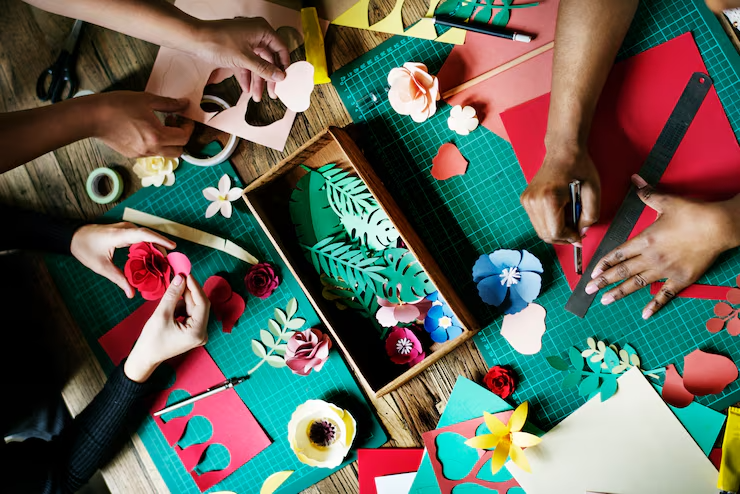
When I tell people I mostly craft with trash, they sometimes look at me funny. Then I show them a picture of the bottle‑cap mosaic my niece made, or the denim pocket organizer that’s been hanging in my kitchen for three years. Suddenly they’re asking where to find the best glue.
It’s About More Than Just Saving Money (Though That’s a Big Deal)
Craft supplies are expensive. I remember walking into a craft store with a twenty‑dollar budget and walking out with basically nothing—a few sheets of felt, some glue, and a pack of googly eyes. That’s when I started looking at my recycling bin differently. DIY crafts using recycled materials turn that whole equation around.
Your “shopping” happens in your own kitchen. Cardboard boxes become building blocks. Bottle caps become game pieces. You get the fun of creating without the stress of a big bill. And honestly? The projects feel more special because you made them from things that would have otherwise been trash.
You may also read :- DIY Upcycled Furniture Crafts
A Simple Way to Teach Kids About the Planet
I’m not a scientist, but I’ve learned that kids understand “waste” when they see it transformed. During one workshop, we made bird feeders from milk jugs. A six‑year‑old told me, “Now the birds don’t have to eat plastic.” That stuck with me. DIY crafts using recycled materials for kids opens up conversations about the environment in a way that feels natural—not like a lecture. They see that their actions matter, and they get to be creative at the same time.
What You Actually Need (No Fancy Stuff)
One thing I’ve learned after years of crafting with groups: complicated tools kill the fun. You don’t need a dedicated craft room or a bunch of expensive gadgets. Here’s my real‑world list.
The Tools That Survive My Workshops
I’ve broken scissors, melted glue guns, and lost more hole punches than I can count. Through trial and error, here’s what I rely on:
- Scissors: A good pair for adults (I like the ones with spring‑action handles) and a separate pair of safety scissors for kids. I label them with tape so nobody grabs the wrong ones.
- Glue: White school glue is fine for paper. But for anything heavier—like attaching bottle caps to cardboard—I use a low‑temp hot glue gun. I handle that part myself when kids are around.
- Paint: Washable acrylic paint is my best friend. It sticks to plastic and glass pretty well, and it washes off little fingers (and tables) without a fight.
- Hole Punch: A standard handheld hole punch is surprisingly useful. It can turn plastic lids into wheels, or make holes for stringing ornaments.
How I Clean My “Craft Stash”
I learned the hard way that sticky jars are no fun to craft with. One time I tried to paint a spaghetti sauce jar without washing it well, and the paint just slid right off. Now I have a system:
- Plastic bottles: Soak them in warm, soapy water to get the labels off. That sticky residue is the worst, but a little cooking oil takes it right off.
- Glass jars: I run them through the dishwasher. Then I let them dry completely—if there’s any moisture, the paint won’t stick.
- Cardboard: I flatten boxes as soon as I get them. The sturdy corrugated stuff is gold for building projects, but I keep the thinner stuff (like cereal boxes) for smaller crafts.
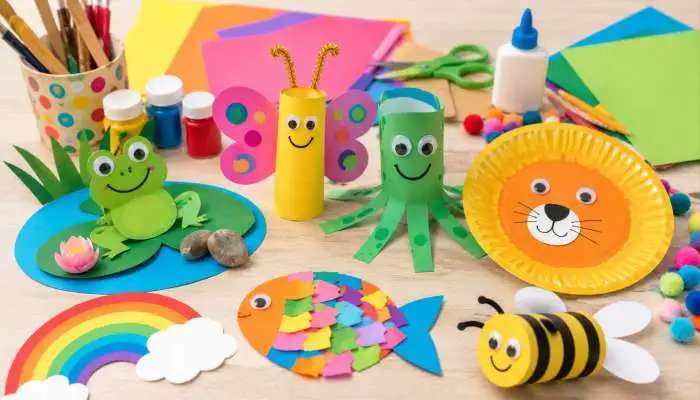
Fun DIY Crafts Using Recycled Materials for Kids
Let’s be honest—sometimes craft projects sound great in theory, but the kids lose interest after five minutes. These are the ones that have kept my workshop kids engaged until cleanup time.
Plastic Bottle Animal Planters
This project started because my niece wanted a pet, but her apartment didn’t allow animals. So we made her a “pet” out of a soda bottle and a little plant. Now she has a windowsill full of them.
-
What you need: Empty 2‑liter soda bottles, scissors (adult use), paint, googly eyes, and potting soil.
-
How we do it:
-
I cut the bottom third off the bottle—kids should not do this part.
-
The kids paint the outside. A pink bottle becomes a pig. A yellow one turns into a lion. I’ve even seen a blue whale made from a water bottle.
-
We add googly eyes and draw faces with permanent markers.
-
Fill with soil, add a small plant, and water carefully.
-
One thing I learned: drill a small hole in the bottom for drainage. I forgot once, and the poor “cat” planter ended up leaking muddy water all over the windowsill. Now I always do that step first.
Cardboard Box Castles (No Two Are Alike)
If you’ve ever given a kid a big cardboard box, you know—they don’t see a box. They see a castle, a spaceship, a secret hideout. I just help them make it happen.
-
What you need: Large cardboard boxes, packing tape, and a box cutter (adults only).
-
How we do it:
-
I cut a door flap that opens and closes. Kids love being able to “enter.”
-
I cut out windows on the sides, but I leave the cardboard “shutters” attached so they can open and close them.
-
Then I step back and let the kids decorate. Markers, paint, even wrapping paper scraps—whatever they want.
-
I once worked with a play therapist named Mark who said something that stuck with me: “Cardboard is the most forgiving medium. Kids build what’s in their head, and it always works.” He’s right. There’s no “wrong” way to build a cardboard castle.
Egg Carton Ocean Creatures
Egg cartons are one of those things that pile up fast. Instead of throwing them out, I save them for this craft. The little compartments are perfect for making sea animals.
-
What you need: Cardboard egg cartons, blue and green paint, pipe cleaners, googly eyes.
-
How we do it:
-
Cut the carton into individual cups.
-
Paint each cup. Green for turtles, blue for octopuses, whatever the kids imagine.
-
Poke holes and thread pipe cleaners through for legs or tentacles.
-
Glue on googly eyes and let them dry.
-
This one is a hit for DIY crafts using recycled materials for kids because it’s simple and the results are adorable. I’ve had kids make entire ocean scenes on a piece of poster board afterward.
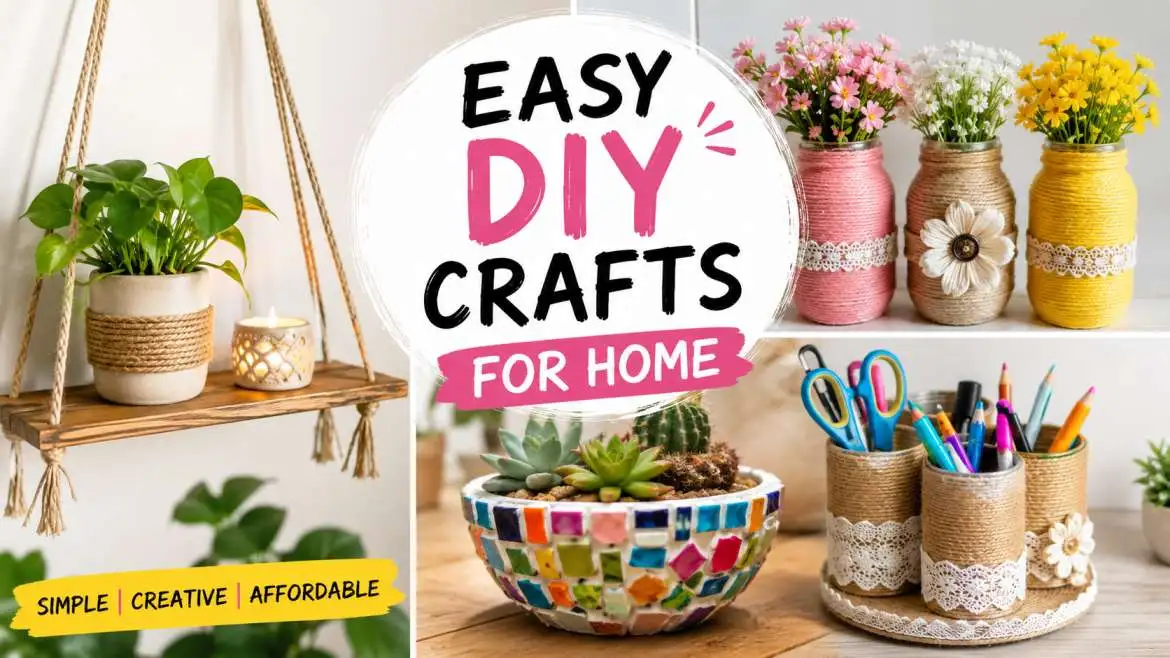
Grown‑Up Recycled Crafts That Look Like You Bought Them
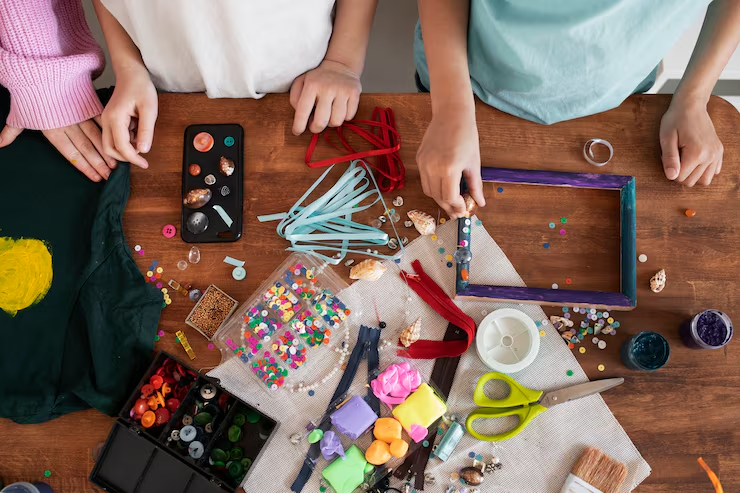
It’s not all kids’ stuff. I’ve made plenty of decor from recycled materials that guests assume came from a boutique. Here are the ones that get the most compliments.
Tin Can Herb Garden Markers
I have a small herb garden on my kitchen windowsill. Instead of buying plastic markers, I started making these from soup cans.
-
What you need: Clean tin cans (no sharp edges), chalk paint, and stencils.
-
How I do it:
-
I remove the labels and wash the cans really well. I also run my finger around the rim to make sure there are no sharp spots.
-
I paint the cans with two coats of chalk paint. It gives that matte, modern look.
-
I use stencils to label “Basil,” “Mint,” “Rosemary,” etc.
-
I punch a small hole in the bottom for drainage (or I use them as cachepots with a smaller plastic pot inside).
-
People always ask where I bought them. They never believe me when I say they’re old soup cans.
Glass Jar Lanterns (Easy and Stunning)
I go through a lot of pasta sauce. Those jars used to pile up in my recycling bin until I realized they make perfect lanterns.
-
What you need: Glass jars, mod podge, tissue paper, and battery‑operated tea lights.
-
How I do it:
-
I cut tissue paper into small squares—different colors if I want a stained‑glass look.
-
I paint a thin layer of mod podge on the jar and stick the tissue paper squares on.
-
I seal it with another layer of mod podge.
-
Once dry, I drop a battery tea light inside.
-
I’ve made these for outdoor dinner parties, and the soft glow is so pretty. Plus, they’re waterproof enough to leave outside for a while, though I bring them in if rain is coming.
Magazine Rolled Paper Baskets
This one takes patience, but it’s worth it. I started making these when I had a stack of old magazines I couldn’t bear to toss.
-
What you need: Old magazines, a knitting needle or bamboo skewer, and white glue.
-
How I do it:
-
I cut magazine pages into long triangles.
-
I roll each triangle tightly around the skewer, starting at the wide end. A dab of glue at the tip holds it together.
-
I end up with a bunch of paper “beads” or straws.
-
I weave them into a small bowl or basket, gluing as I go.
-
The result looks like something from an artisan market. I’ve given these as gifts, and people are always amazed that they’re made from old magazines.
Giving Old Clothes a Second Life (No Sewing Required)
I’m not a seamstress. I can barely sew on a button. But I’ve found some really easy ways to use old fabric that don’t involve a needle and thread.
No‑Sew T‑Shirt Tote Bags
This is my go‑to project for older kids and teenagers. It’s fast, useful, and it teaches a great lesson about reducing plastic waste.
-
What you need: An old t‑shirt and scissors.
-
How I do it:
-
Lay the t‑shirt flat. Cut off the sleeves.
-
Cut a deeper neckline to create the handles.
-
Cut fringe strips along the bottom hem, about one inch apart.
-
Tie the front and back fringe strips together in double knots. Tight knots—these are what hold the bottom closed.
-
That’s it. You’ve got a reusable bag. I’ve made these with groups of kids, and they always want to make one for every family member.
Denim Pocket Organizers
I love old jeans. Not for wearing, but for the pockets. They’re sturdy and they look cool hung on a wall.
-
What you need: Old jeans, scissors, a wooden hanger or a piece of ribbon, and a staple gun or strong glue.
-
How I do it:
-
I cut the back pockets off the jeans.
-
I arrange them on a wide ribbon or staple them directly onto a wooden hanger.
-
I hang it by the door to store keys, mail, sunglasses, or art supplies.
-
Mine has been hanging in my mudroom for two years now. It’s held up better than any plastic organizer I’ve ever bought.
Holiday Crafts That Don’t Create More Waste
Holidays are fun, but they can generate a lot of trash. I try to make my decorations from recycled materials whenever possible.
Toilet Paper Roll Christmas Ornaments
I start saving toilet paper rolls in October. By December, I have a bagful.
-
What you need: Toilet paper rolls, paint, ribbon, and maybe some glitter if you’re feeling festive.
-
How I do it:
-
I flatten the rolls and cut them into thin slices.
-
I paint the slices red, green, gold—whatever fits my theme.
-
I glue them together to make little flowers, reindeer faces, or even tiny wreaths.
-
I attach a ribbon loop to hang on the tree.
-
They’re lightweight, so they don’t weigh down branches. And at the end of the season, I just toss them in the recycling bin.
Plastic Bottle Halloween Luminaries
Milk jugs are perfect for Halloween. They’re the right shape and size for spooky faces.
-
What you need: Empty gallon milk jugs, black permanent marker, and glow sticks (or battery tea lights).
-
How I do it:
-
I wash the jugs and remove any labels.
-
I draw spooky faces on the front with the marker.
-
I drop a glow stick inside or place a battery tea light at the bottom.
-
I line my walkway with these on Halloween night. They look great, and I don’t have to worry about a real flame with kids running around.
How I Organize My Craft Stash (So I Actually Use It)
I used to have a messy box of random recyclables that I never touched. Now I have a system, and it makes crafting so much easier.
My Three‑Bin Method
I keep three bins in my laundry room:
-
Paper Goods: Toilet paper rolls, cereal boxes, magazines, cardboard.
-
Plastics: Bottles, yogurt cups, lids (washed and dried).
-
Fabrics: Old clothes, fabric scraps, worn‑out sheets.
When my kids say they’re bored, I tell them to “shop” in the bins. It sparks creativity immediately. Sometimes they pull out a bottle and a piece of cardboard and come up with something I never would have thought of.
Why I Prep Ahead
I’ve learned that DIY crafts using recycled materials for kids go much smoother if I do the tricky prep work first. I call it “pre‑crafting.” I’ll cut the sharp edges off cans, slice plastic bottles to the right shape, and flatten cardboard boxes. That way, when the kids sit down, they can focus on the fun part—decorating and building. It saves frustration and keeps everyone in a good mood.
Frequently Asked Questions
Q: Are these crafts safe for toddlers?
Yes, but you have to choose carefully. Avoid tin cans (sharp edges) and small parts that could be choking hazards. Stick to large cardboard and paper projects. Use non‑toxic glue and paint. For DIY crafts using recycled materials for kids under three, I also skip the googly eyes and use markers for faces instead.
Q: What’s the best glue for plastic?
I’ve tried a bunch. For a strong hold on plastic bottles, a low‑temp hot glue gun is my favorite. I handle that part when kids are around. For paper‑based projects, regular white school glue or a glue stick works fine.
Q: How do I keep paint from peeling off plastic?
Prep is key. Wash the plastic really well to remove any grease. Then lightly sand the surface with fine‑grit sandpaper—this gives the paint something to grab onto. I use multi‑surface acrylic paint and seal it with a clear sealer or mod podge when it’s dry.
Q: Where can I find more ideas?
Honestly, I get a lot of inspiration from Pinterest and from just looking around my house. Search for terms like “cardboard box activities for kids” or “plastic bottle garden ideas” and you’ll find tons of tutorials. Also, your local library probably has books on upcycling and recycled art. I’ve checked out several that gave me new ideas.
Q: Can I sell crafts made from recycled materials?
Yes, absolutely. I know people who make a nice side income selling upcycled goods at local markets. Just make sure your items are safe and sturdy. For example, painted wine bottles as vases are fine. But I wouldn’t sell anything electrical made from recycled parts unless you really know what you’re doing.
Conclusion
I’ve been crafting with recycled materials for years, and I still get excited every time I finish a project. It’s not just about the finished piece—it’s about the moment when you realize that something you were about to throw away has become something useful or beautiful. Whether you’re building a cardboard castle with a four‑year‑old or making a set of glass lanterns for your patio, you’re making a choice to be creative and mindful.